












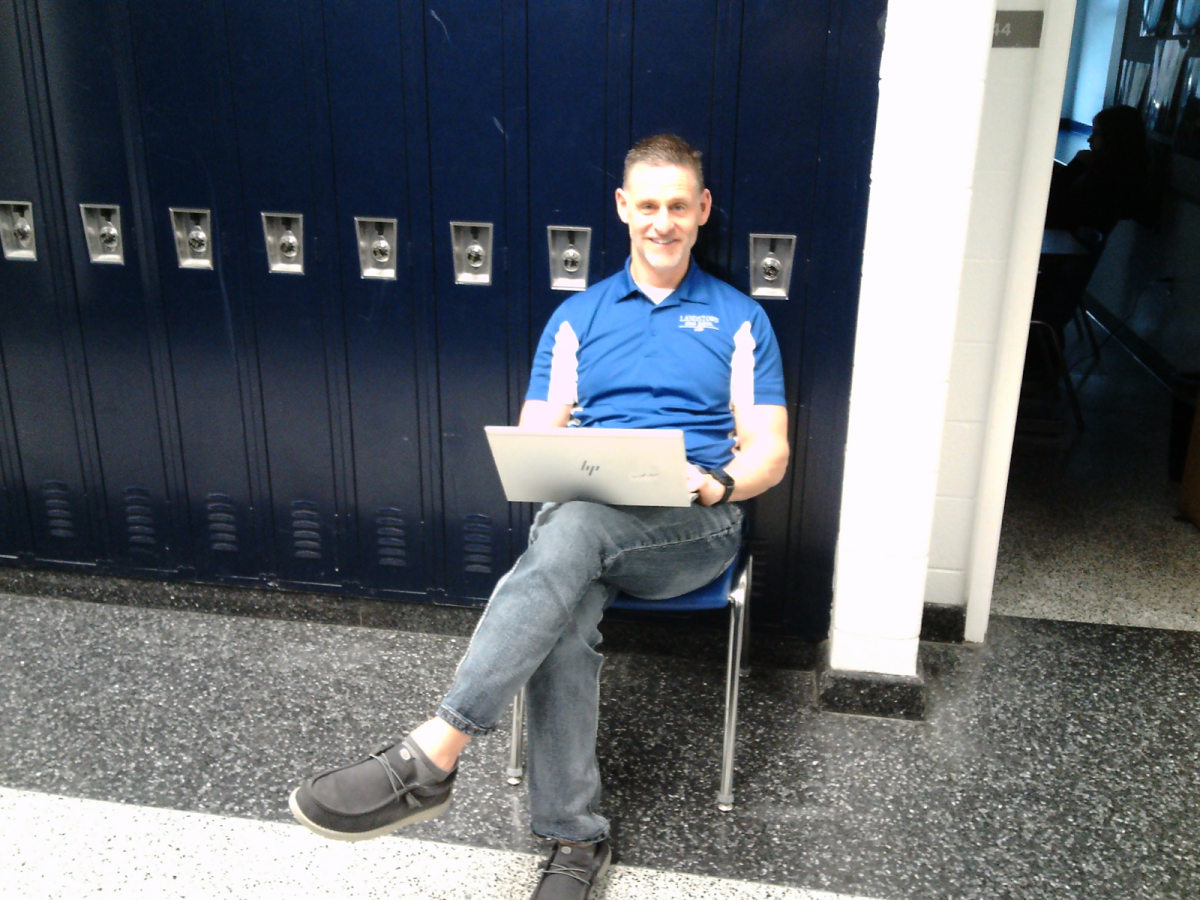
It has been said that “the influence of a great teacher can never be erased.”
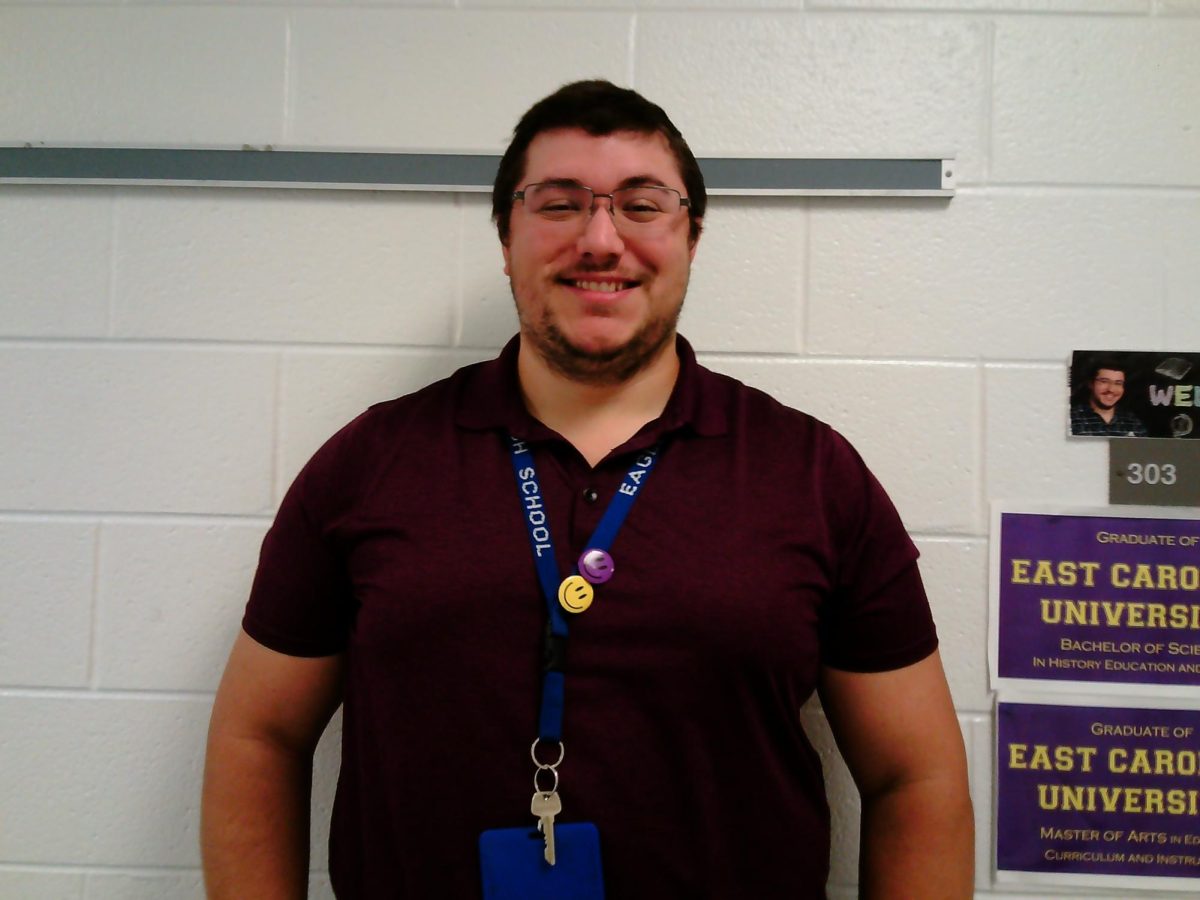
Landstown High School’s Mr. Zira embodies this tenet and grew up moving around a lot. Since his dad was in the Coast Guard for 30 years, he has lived in North Carolina, Washington State, Maryland, Ohio, and Virginia.
“And yeah, my life growing up was pretty hectic in terms of moving,” he says, “A lot of change and a lot of adapting to that change.”
An important memory Mr. Zira had as a child was when he traveled from Washington to Maryland. The trip across the country took a week and a half by conversion van; however, the van broke down in Utah, and had to be repaired for two days.
Fortunately, he was able to see new landscapes and be exposed to different places, making this trip an important memory.
Mr. Zira attended East Carolina University and got his bachelor’s and master’s degrees in History Education Therapy.
His love for social studies and history is what prompted him to choose History Education Therapy as his major. He has always had a desire to find a field where he can help people; thus, he chose to focus on teaching to help people better understand our history.
Before coming to teach at Landstown High School in Virginia Beach, Mr. Zira taught in North Carolina and noticed differences in their school environment. The school he taught at in North Carolina was much more government-funded, with many students coming from different social and economic backgrounds. Although the school environment in North Carolina is different from the school environment in Virginia Beach, they both have the same general goal of learning around the same curriculum.
“There had to be some difference in terms of how certain things were approached in a teaching perspective, just to go ahead and try and relate a little bit more and make things make more sense,” says Mr. Zira, “So the general idea of what we’re doing is the same, but the approach is different.”
While both school districts had different school environments, he does not prefer one over the other due to having to teach in different styles in different areas.
“It’s still teaching,” he states.
Mr. Zira’s teaching style incorporates lectures and hands-on teaching to help his students be more successful in learning AP European History. He believes balancing these two techniques helps his students comprehend the content presented to them.
“The more involved you get with it, the easier it is for it to go ahead and mean something,” he explains.
Students who have taken his classes before have expressed their positive experiences with Mr. Zira as a teacher.
Chelsy Lowary, a Landstown High School student currently in her junior year, highlights how the exam-taking tips taught by Mr. Zira benefited her while taking the College Board exam for AP European History, allowing her to pass.
Lowary gives examples of hands-on activities, such as a European Salon and collaborative assignments, which helped her retain knowledge of historical events and ideas.
“Coming into class, I knew nothing about Europe,” says Lowary, “However, even today, I can still remember basic terms and can explain the event with some context behind it, which is very out of character for me.”
A takeaway Lowary recites, “I learned the importance of not procrastinating assignments and actually doing them benefits your knowledge and performance in class.”
Another former student of Mr. Zira’s, student who who is also currently a Landstown High School junior, Eleni Loucas, highlights how his passion for history passes on to his students to allow them to succeed in his class. She expresses that his “good personality” is what makes Mr. Zira stand out from other teachers.
Like Lowary, Loucas also believes firsthand experience and hands-on activities make understanding the content they are given a lot easier.
Loucas says, “I learned that I really need to pay attention to the readings in Mr. Zira’s class, and it’s helping me now in my current history class, AP U.S. History, because I make sure to set aside specific time in order to look at history in a way that I realize it needs to be viewed rather than in a way that I feel like it should be viewed.”
It is greatly expressed that Mr. Zira has left a never-ending impact on his students, which will continue to affect them for the rest of their lives.