















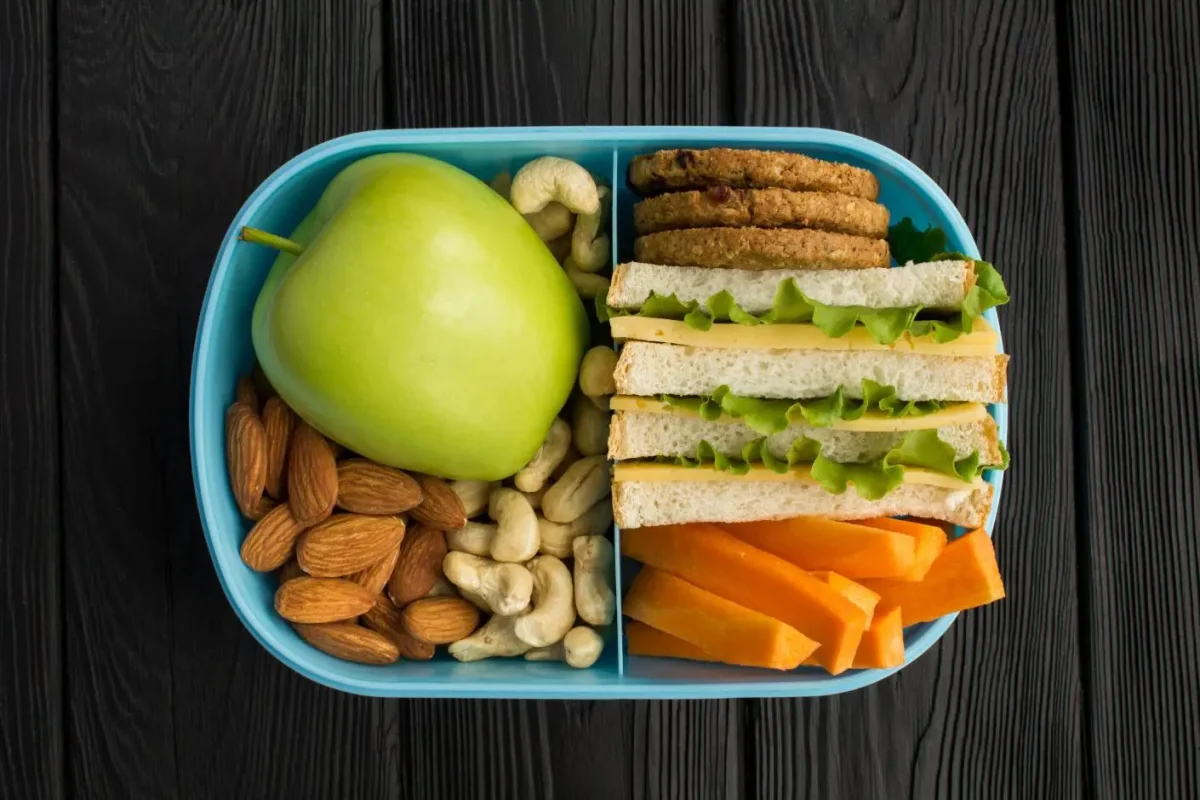
Finally, third block is over! At last, you can head straight to the cafeteria to get some school lunch grub. Unfortunately, when it’s finally your turn in the line, you are struck with disappointment over what you see.
Landstown lunches are a wild card: sometimes they provide relatively healthy meals, while other times they either only offer unhealthy options or don’t offer enough. This predicament is a huge problem for students who consistently seek to satiate their hunger without compromising their health.
Samuel Comeau, a 12th grader at Landstown High School, confesses his frustration over the lack of choices.
“I don’t like the lack of beverage choices. There’s only milk, and for people who are lactose intolerant like me, I just don’t drink it. Sometimes there’s lactose free milk, but usually there isn’t.”
The lunch menu doesn’t favor those who need specific nutrition requirement; it only supplements further burdening the students.
The milk, however, is far from being only issue. Rya Dontcheva, a 11th grade student at LHS, asserts that the quality of the school pizza can be poor.
“It’s super stiff. You hold it and it just doesn’t move at all. I hate that pizza,” she says while describing the pizza.
According to Stanford University, a 2014-2015 study conducted to assess the amount of added sugars in school meals found that “67% of schools exceeded the limit recommendation in school lunches. (less than 10% of calories)”
Additionally, they reported that school meals contain about eight teaspoons (33 grams) of added sugars per day, half of the average student’s daily consumption of sugar.
Students already consume huge amounts of sugar that cause a plethora of health problems, yet school lunches shouldn’t exacerbate this issue.
With a lack of healthy options and an arsenal of unhealthy ones, the school lunch doesn’t pertain to the students’ needs.
According to PubMed Central, “school lunches served did not meet the dietary guidelines for energy and nutrients.”
Samuel also stated that he feels hungry after eating the school lunch portions “almost all the time.”
And although though there’s an option to order another main meal, the charge is nearly double of the original cost of buying an entire lunch. Paying almost double just to not be hungry sounds absurd, but that’s the current state of the lunches.
So this brings up the question: if school lunch is not very nutritious, fulfilling, nor healthy, why do students continue to eat it?
Due to the overwhelming schedule most students have, they rarely have time to make their own breakfast, let alone to prepare a healthy lunch to eat during school.
This means that they have to resort to eating what the school has to offer, which should be convenient without undermining the students’ health.
Dontcheva conveys the convenience of school lunch. She said it’s “easier to buy school lunch” than making lunch at home and bringing it to school.
Comeau also said, “It’s really convenient. Preparing a lunch can take a lot of time.”
This means students only benefit from school lunches because of practically, leeching on the idea that “the best chef is hunger,” which is why they can get away with serving poor quality meals.
The Landstown school lunch doesn’t prioritize providing essential nutrition to students, but to serve hungry students the bare minimum.
Although the school lunches have improved drastically over the years, there is still plenty of room for further improvement so that the health of the posterity can be ensured.
That way, students can enjoy the convenience of school-provided lunches whilst knowing that they can get the necessary nutrition needed for healthy development.